
What you’ll discover
The blue dot on your phone begins with a clock, not a map. This episode explains what GPS satellites actually broadcast, how a receiver turns the travel time of those signals into distance, why four satellites are normally needed, and what the term pseudorange means.
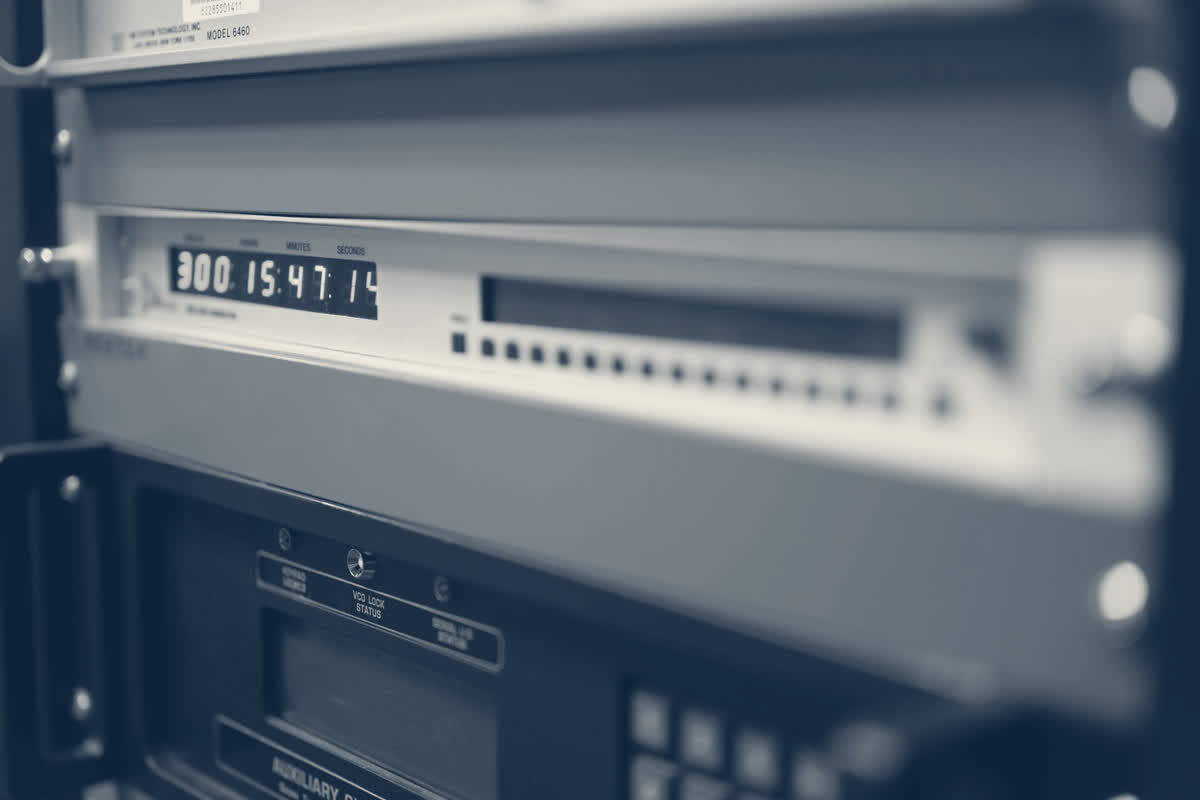
It covers why atomic clocks matter, how Einstein’s special and general relativity affect the system, and why the often-repeated claim that GPS would drift ten kilometers a day without relativity is incomplete. Then it comes back to the ground: how the satellites themselves are tracked and corrected, why positions go wrong among tall buildings and in tunnels, why your phone’s blue dot uses much more than GPS, and how GPS became part of the timing behind power grids and telecommunications.
Listen and watch
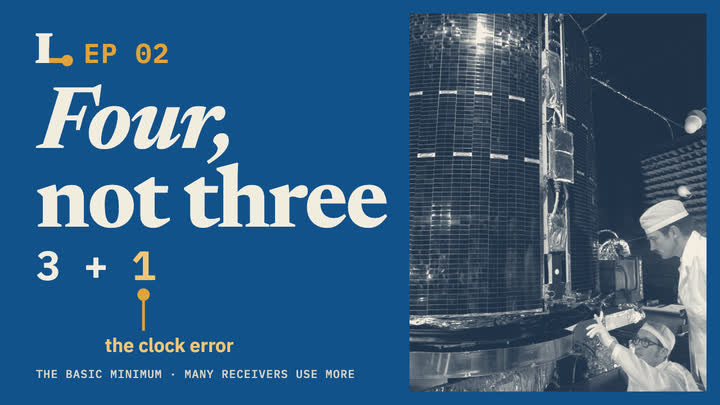
Rebuilt edition on the way
Researched again from the sources in November 2026, then rewritten, narrated and edited. The rebuilt edition is finished and awaiting release. It has no release date yet.
Chapters: original edition
- 00:00The Blue Dot
- 01:28It Isn’t a Map. It’s a Clock.
- 04:50Spheres and the Fourth Satellite
- 09:13Einstein Enters
- 16:23The Machine Above, and the Machine Below
- 19:18Why GPS Gets Things Wrong
- 23:10The Blue Dot Is More Than GPS
- 25:38GPS Is Also a Clock
- 30:10How Humans Built This
- 34:25Back to the Blue Dot
About these chapters
Chapter titles as published on YouTube. Start times were measured on 21 Nov 2026 from a machine transcript of the published audio; eight of them differ from the times in the YouTube description, by 2 to 4 seconds.
Transcript
A checked transcript will be published with the rebuilt edition. Machine-made captions are not published here as transcripts.
Research sources
Corrections and updates
Corrections
-
Under review
Original edition, narration at about 28:05.
The narration says a study concluded that the form of mobile broadband it examined depended heavily on GPS timing. The study did not find this; it assumed it. Its estimate of what GPS was worth to telecommunications assumed that 4G mobile networks would not have been feasible without GPS if the older, land-based Loran-C system had been the main alternative source of timing. Most of the experts it interviewed thought the industry would have kept advancing at a similar pace with another source of precise timing (S15). Being checked.
Update history
Show the updatesHide the updates
- The rebuilt edition is finished and awaiting release. Its research sources will be listed here when it is released.
- Page created. Chapter start times measured against the published audio.
Corrections fix factual errors and stay visible. Updates record routine improvements. See the corrections policy.